
ABOUT PARK EUL BOK
I was born in 1915 in what was then Gaeseong-eup. Growing up as the youngest of one son and three daughters in a wealthy family, I spent my childhood lacking nothing. I attended Hosudong Elementary School and Hosudong Girls' High School; although I was not particularly diligent in my studies, I enjoyed playing the harmonica, which was uncharacteristic of a young girl. However, due to the social prejudices against women at the time, I recall being scolded quite often. I was better at English than others and had a taste for literature, so I diligently sought out and read world classics. I had a hobby of embroidery, but at the time, I never imagined that I would make it my lifelong profession. Looking back, what this period left me with, firstly, was the cultivation of dreams and curiosity about the wider world as a literary girl, and secondly, the internalization of the pride and temperament of the people of Gaeseong, enabling me to hold faith in their values for the rest of my life.
After graduating from high school, I moved to Seoul and entered the preparatory course for the English Department at Ewha Women's University. Although life in Seoul felt unfamiliar and vast compared to Gaeseong, I would often get lost in daydreams that I somehow needed to go to a different, wider, and bigger world.
My second cousin happened to be studying abroad in Japan, so I asked her for help and inquired about various aspects of my studies in Tokyo when she visited our hometown during the vacation. My family opposed my studying in Tokyo, feeling anxious about sending their young daughter far away, but it seems they could not break my stubborn determination to see things through once I made up my mind. Finally, after completing my first year of preparatory studies, I was able to enroll in Tokyo Women's University of Fine Arts. It was on my cousin's advice that I chose the art college, as well as the teacher training and embroidery departments.
It was during this time that I discovered concrete possibilities for my future. Living in a dormitory where I knew nothing but studying, I studied diligently with the thought that I must not fall behind the Japanese students as the only Korean female boarder. As if immersed in a religion, I poured my whole heart into the delicate, lustrous threads and needle tips, filling the embroidery boards. Amidst this, I was able to experience a whole new world I had never encountered before, and as I finished my embroidery and savored it, I would dream of my future.
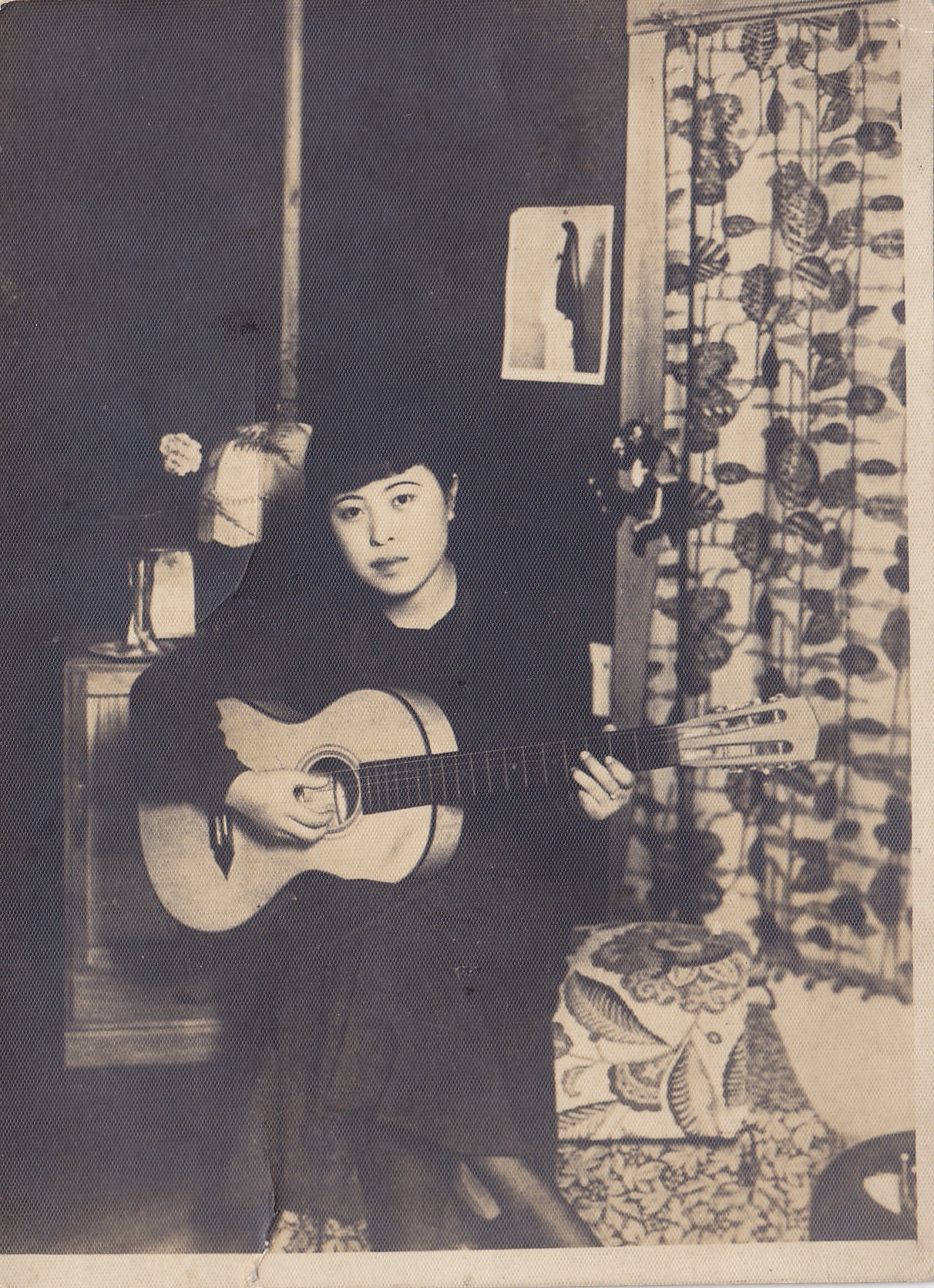
While living in a boarding house after leaving the dormitory, I found comfort for my homesickness by playing the Hawaiian guitar, which I had learned back in my Hosudon Girls' High School days. I recall that Park Min-jong (who later served as Dean at Kyung Hee University), who had come to study abroad after me, would bring his violin, and Jin Hong-seop (who later served as Director of the Ewha Womans University Museum) would bring a guitar to my room, and the three of us would play together. Looking back now, those were truly enchanting times. In 1937, upon graduating from university, I finally returned home, having received an embroidery and knitting teaching certificate from Japan's Ministry of Education.
The year after my return, in 1938, I began teaching at my alma mater, Hosudon Girls' High School. By nature, I threw myself wholeheartedly into anything I undertook, and teaching was no exception—I devoted myself to it completely. My students followed me closely, as if I were an older sister to them. Perhaps because of this, that same year, four of my students entered a competition hosted by a newspaper company, and all four received top honors—a joy I still remember fondly. This gave me great courage in my own artistic pursuits, and that same year, I had the honor of having my work "Chrysanthemums and Mandarin Ducks" selected for the Joseon Art Exhibition.
I think of myself now as a truly fortunate person. In that era, being given the chance to teach young people as a woman, while also being able to immerse myself in my own artistic world, was not a stroke of luck that came to everyone. All of this happened within a single year of returning home after completing my studies abroad, so at that young age, I felt as though wings had sprouted from my shoulders.
However, my surroundings would not allow me to remain wholly absorbed in my work as a teacher and artist. Unlike today, in those days it was simply unthinkable for a woman to remain unmarried past a certain age. I married at the then very late age of 27. My husband was a doctor who had graduated from the Medical School of Keijo Imperial University, a man from Pyeongan Province known for his exceptional talent. Upon marrying, I felt bound by the custom of yeopiljongbu (a wife must always follow her husband), believing I had to sacrifice everything for him and our household—and so I had no choice but to leave my teaching position and set aside my own work for the time being.
After marriage, I became the mother of two sons and two daughters. During this time, our country was liberated, and many social changes took place. I began to feel something like a sense of duty—almost a desire—to raise these children well. Since our society at the time was steeped in poverty and hardship, a somewhat selfish maternal instinct also rose within me: a determination that my children, at least, should not suffer because of money. My husband was working as the head of the medical department at Kaesong Prison, and supporting our household on his salary alone was far from easy. Between managing the household and going out to earn money on the side, I felt my dream of embroidery gradually fading, and though this filled me with anxiety, there was no way to escape the reality before me. In 1949, I gave birth to my youngest child, and that same year, the "Songhaksan Incident" occurred in Kaesong. It was a truly horrific and terrifying event. Feeling that we could no longer stay there, my husband transferred to become head of the medical department at Mapo Prison.
Taking our young children, we left our hometown and moved into official housing in Mapo, Seoul. Before we had even settled into our modest life in Seoul, war broke out. My husband, being a man of rigid principle, was reluctant to flee as the head of his department, and with a vague optimism about how long the war might last, our entire family remained in Seoul. There was hardly anyone who did not suffer during the Korean War, but the hardships and threats to our lives that we endured during this time are difficult to put into words. After UN forces recaptured Seoul, Chinese communist forces pushed back down, and this time we fled directly to Busan. Life as a refugee in Busan was, in fact, better than the time we had spent remaining in Seoul.
By chance, we encountered relatives and acquaintances who were relatively well-off, and received various kinds of help from them. Above all, I was able to take up embroidery again, and I even began lecturing in the Department of Home Economics at Ewha Womans University. After the recapture of Seoul, we remained in Busan for some time before moving back. With the help of relatives, I managed to secure a small house in Euljiro 4-ga, and my husband opened the Oh Pediatric Clinic on the first floor of this house. As the years passed in this way, our children grew up and became middle and high school students. Seeing them attend prestigious schools that everyone envied filled me with pride and satisfaction. At the same time, having found some stability in my own life, my longing to return to my work began to rise once more.
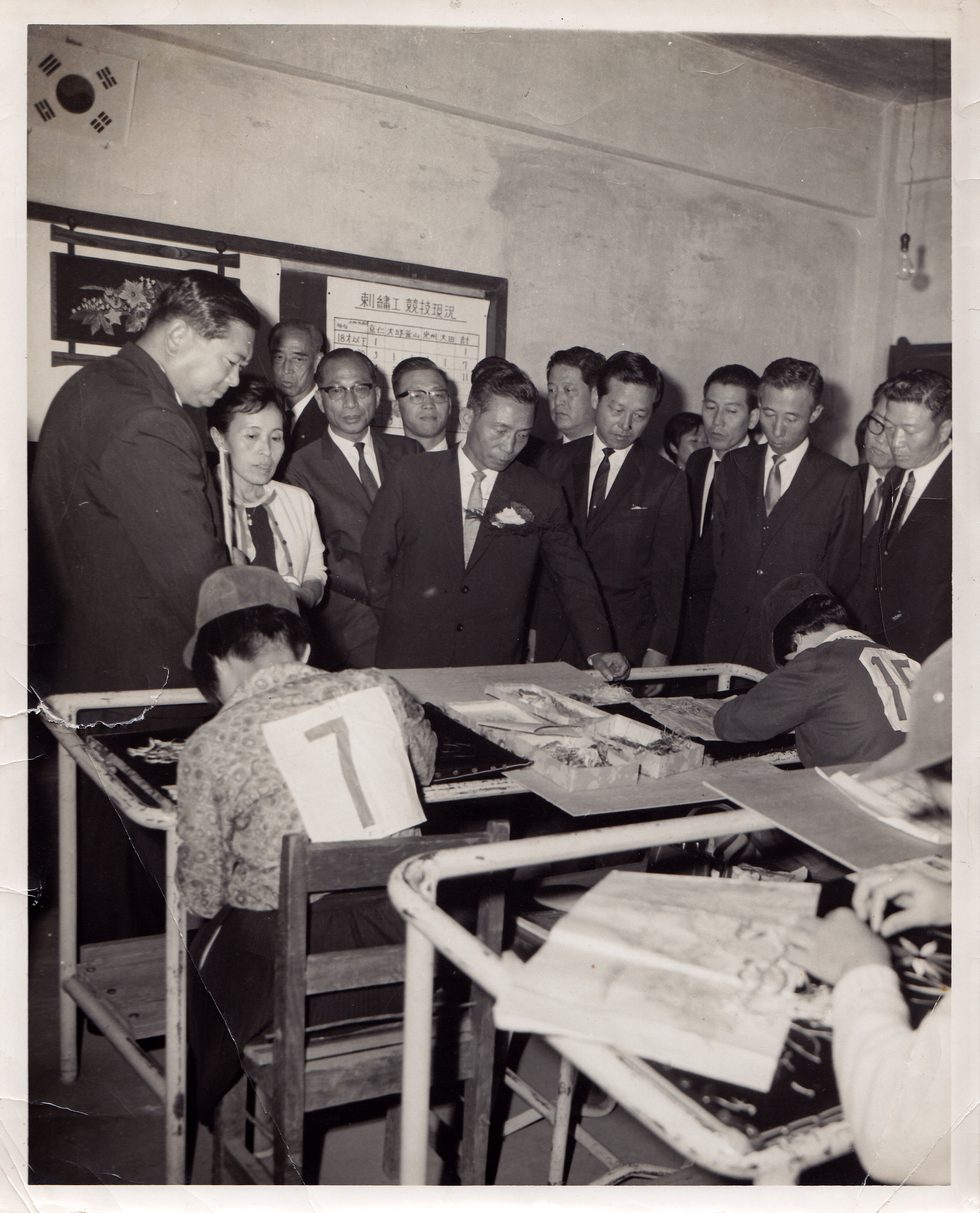
Amid all this, a turning point that would greatly change the course of my life arrived. Shortly after the launch of the Third Republic, President Park Chung-hee held the National Skills Competition to encourage the nation's technological advancement. At this competition, I was appointed as the division head and section chief for the embroidery category, which gave me a glimpse onto the international stage. I was able to participate in the Biennale as an observer at the UNESCO International Association of Plastic Arts General Assembly, which allowed me to survey the art world across Europe and America. Today, with the world grown so much smaller, traveling abroad is nothing extraordinary, but in 1961, it was an entirely different matter.
Seeing with my own eyes the works of art I had only encountered in books, and the working environments I had only heard described in words, I came to understand what we needed to adopt for ourselves, and I realized that much of the gap between us and them came down to competitiveness. This journey, in many respects, instilled in me great strength and courage. After returning home, I began searching for a plot of land where country living would be possible, since the area around our Yeji-dong house had grown too close to Dongdaemun Market for comfortable residential life, and the clinic also seemed to need expansion and separation. On a plot of roughly 2,200 pyeong (Ui-dong, 86-4), I began building a two-story Western-style house of about 100 pyeong, designed by Jung In-guk, who had accompanied me on my trip to Europe and America. The construction, entrusted to others, dragged on for over two years due to slow progress, and once it was roughly completed, I proceeded with the garden and other remaining work. I poured all my devotion and time into it, driven both by the joy of creating something and the joy of building a new home for my family.
Yet the time my family and I actually lived in this house amounted to only a few years. As the children left for further schooling, study abroad, and marriage, our family gradually grew smaller, and after I too moved away, the house slowly became one without a resident owner. Today, it serves as a place to keep and display my works, and occasionally as a place where my children and I go to rest on weekends. Returning home after six months of travel, I threw myself into my work with more dedication than ever before. This was because, beyond finding personal stability in life, my desire to create had been reawakened by my travels abroad, and I had also gained confidence that I, too, could achieve something. The following year, after a little over a year of preparation, I held my "First Solo Exhibition." It was an overwhelming success. Figures from all walks of life came to view it, and many people I did not even know came to offer their congratulations—and looking back through the guestbook later, I found that many of them had since become prominent figures. I never expected this exhibition to become such a topic of conversation, but from what I have heard from those who came after me, this exhibition was said to be the very first "solo textile exhibition" in our country, opening a new path for the world of embroidery. At that time, it was still the general practice—and indeed the tradition—for embroidery to be worked from patterns, transformed into finished pieces through variations in color and various techniques. Even today, traces of that tradition remain in embroidery work, as it is still often regarded merely as a form of decoration for everyday items, making it difficult to break away from traditional techniques, and even more difficult to attempt anything new.
Perhaps it was my own pursuit of a more creative approach that gave the exhibition its distinctive character. I believe the roughly ten years that followed were the second period of growth in my life. I was selected for the National Art Exhibition three years in a row, held several more exhibitions, and had a great deal of exchange with various figures in the art world. I was especially influenced by Mokbul Jang Woon-sang, and after his marriage, I grew close to his wife, Lee Shin-ja, through many discussions about our work—a friendship that remains close and unreserved to this day. I was also very close with the painter Unbo Kim Ki-chang and his wife Uhyang, and in particular, the painter Park Rae-hyun gave me a great deal of direct help with my work. Beyond this, many of my former students from Hosudon Girls' High School, including Kim Young-ho, would set everything aside to help me in every way, materially and otherwise, whenever I held an exhibition—something I carry in my heart with gratitude to this day. There was no self-interest involved, no ulterior motive; that they would do so simply because of the bond between teacher and student is something I still regard as truly beautiful.
As a housewife, I often had to be away from home, and as a mother, I feel a certain guilt for not having been able to watch over my children with the attentiveness I might have. Yet all four of my children grew up upright and true, each finding their own path—completing university, going abroad to study, and beginning their careers. Among them, my second daughter, Oh Sun-hee, followed in my footsteps and studied textile art. At my "Second Solo Exhibition" in 1967, Sun-hee, who was then about to graduate from the College of Art at Ewha Womans University, joined me, and it became a mother-daughter exhibition. I felt it was a meaningful exhibition, both as a new beginning for my daughter and as a way of showing the process of creating work amid the flow of life. We presented over thirty pieces, attempting to show how classical techniques could be woven into new creative work, and I believe the generational comparison also made for a compelling exhibition.
Afterward, Sun-hee devoted herself wholeheartedly to this path—she graduated from Indiana University in the United States, worked as an assistant professor at Auburn University, then moved to France to pursue her creative work, and now serves as a professor at Duksung Women's University. Perhaps because of the bond shared between mother and daughter, we held another "Mother-Daughter Exhibition" twelve years later, this time in Paris, where Sun-hee was studying. Local artists came and praised the traditional beauty of the East, and Korean expatriates in particular cheered with joy at seeing a taste of their homeland they had long gone without. During this period, I also had exchanges with professors from French art schools, and I was invited to the home of Professor Dupeux, head of the textile department at the École Boulle and a frog collector, where I embroidered a frog for him. After the exhibition concluded, I enjoyed touring factories and traveling, spending a delightful time. Despite the fickle Paris weather, when the clouds cleared and sunlight streamed down in bundles through the fresh green trees, it was exactly the kind of scene I had always wanted to capture in my work. Following the Paris exhibition, a planned exhibition in the United States was held in Maryland. That area, near Washington, D.C., was somewhere I had close friends and often visited whenever I traveled to America. I held the exhibition at a leisurely pace over about ten days, and though I received offers to purchase my work, I did not sell any of it. This was especially true for "Jongryusu," which I had always felt I must keep for myself.
After returning home, moved by what I had felt during my travels abroad, I took up the gayageum again, an instrument I had learned in my younger years. I felt that this too carried within it the hidden touch of Korean women's hands, and that it shared something in common with embroidery. If our traditional song is a sorrowful weeping born of han, then embroidery is a quiet expression bound by its own constraints; if the gayageum is the sound of suppression, then embroidery might be called the gentle unfolding of color and tone. Perhaps, wishing for the Buddhist cycle of life to bloom into a flower, I turned to this kind of indirect expression.
Entering the 1980s, feeling that I needed new vitality in my life, I took up many activities beyond embroidery. I played golf and went hiking often. In particular, the weekend trips to Samgaksan with my eldest daughter and her husband, who lived in Pyeongchang-dong, along with their friends (Professor Park Yong-mun of the Department of Mathematics at Yonsei University, and Professor Kim Seung-hee of the Department of Metallurgical Engineering at Kookmin University) and their spouses, remain to this day a great joy and source of strength for me.
Whenever the opportunity arose, I traveled abroad extensively with friends. I wanted to see more of the wider world, not just the United States and Europe. I traveled widely through Southeast Asia, Taiwan, China, Australia, Eastern Europe, and Russia, taking in their cultures and art worlds. In early July of this year, I attended the Lausanne Biennial in Switzerland and the Venice Biennale, organized by the Korean Fiber Art Association, and watching the young fiber artists eagerly taking everything in, I felt a sense of reassurance that they would be the ones to open up the world of fiber art that I myself had not been able to fully achieve. It was heartening to see that, wherever they were, they each carried their own history and lived life in their own way. Amid my travels and hobbies, thoughts of my work always remain close to my heart. Even now, I have not let go of embroidery, and I continue to try new things. I have been collecting long strands of hair, wondering what it might be like to use hair as a material. Though I have long striven to express a world of embroidery uniquely my own, I feel that I am now too old to break free from traditional conventions and techniques. Since embroidery, among our ancestors' crafts, has largely been the domain of women and closely tied to everyday life, it has never been possible to expect the kind of dramatic transformation seen in other craft fields. And so I have come to believe that the true essence of embroidery lies in holding fast to old traditions while, at the same time, pursuing subtle and delicate change.
I did not set out on this long journey intending to devote my entire life to embroidery alone. On the surface, it may seem that I lived faithfully according to my own way, but in truth, it was not an easy life in which to remain single-mindedly devoted to embroidery alone. I look back and wonder if this was, perhaps, a limitation of being a woman. I only hope that these short steps I have taken, my stockinged feet damp with the morning dew, might be looked upon with some tenderness.
Written one day in 1995
Park Eul-bok
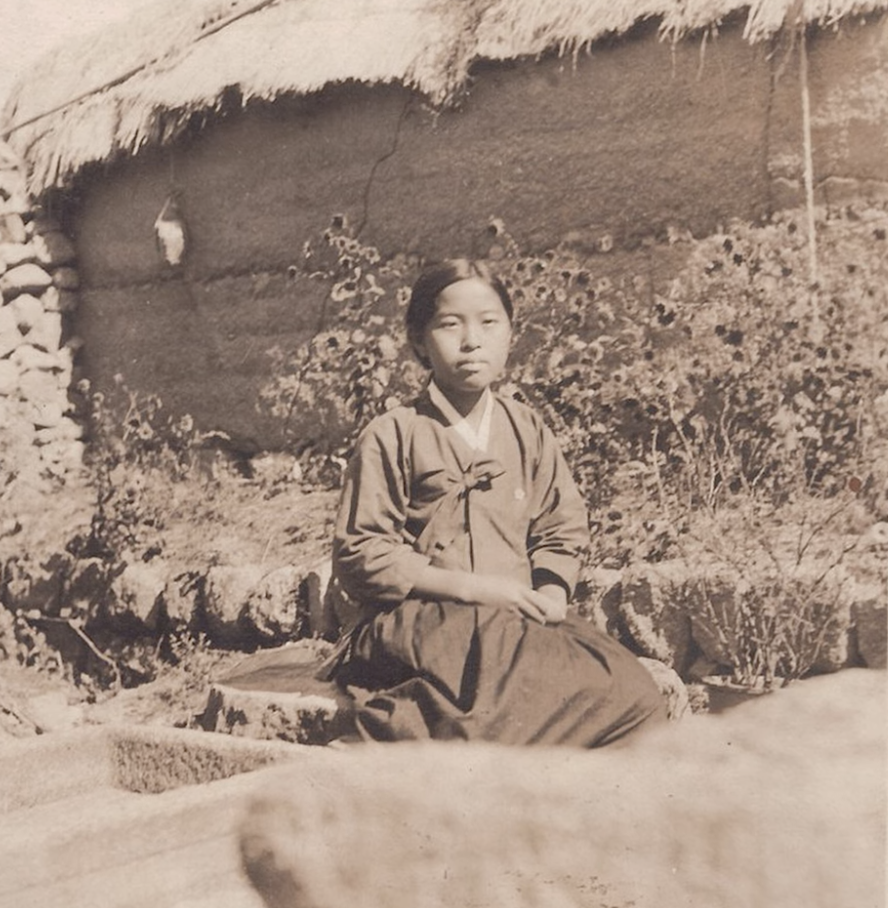
Childhood
During Her Student Days at Hosudon Girls' High School
Studying Abroad at Tokyo Women's University (1930s)
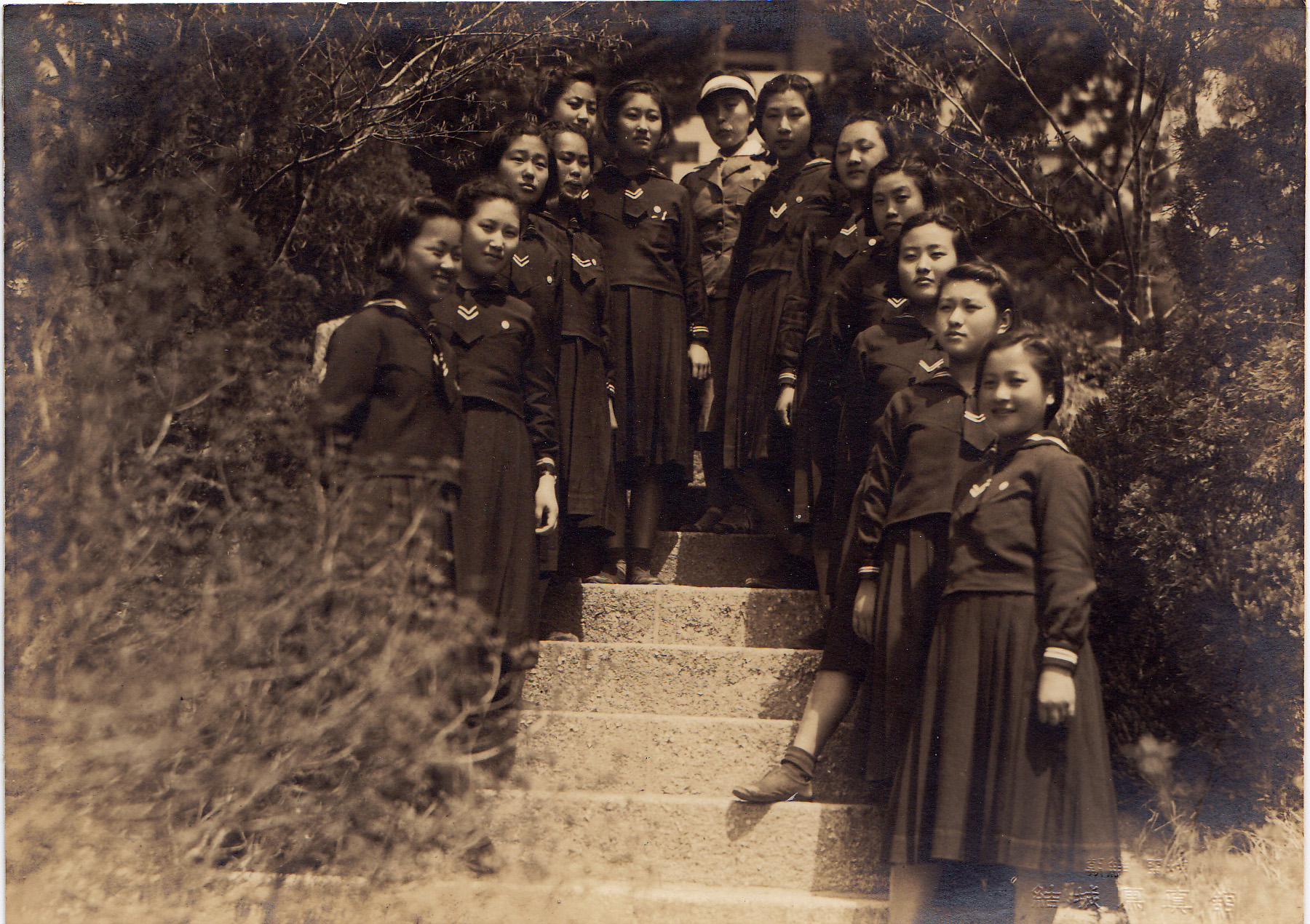
In Front of Hosudon Girls' High School with Fellow Faculty (Late 1930s)
President Park Chung-hee's Visit
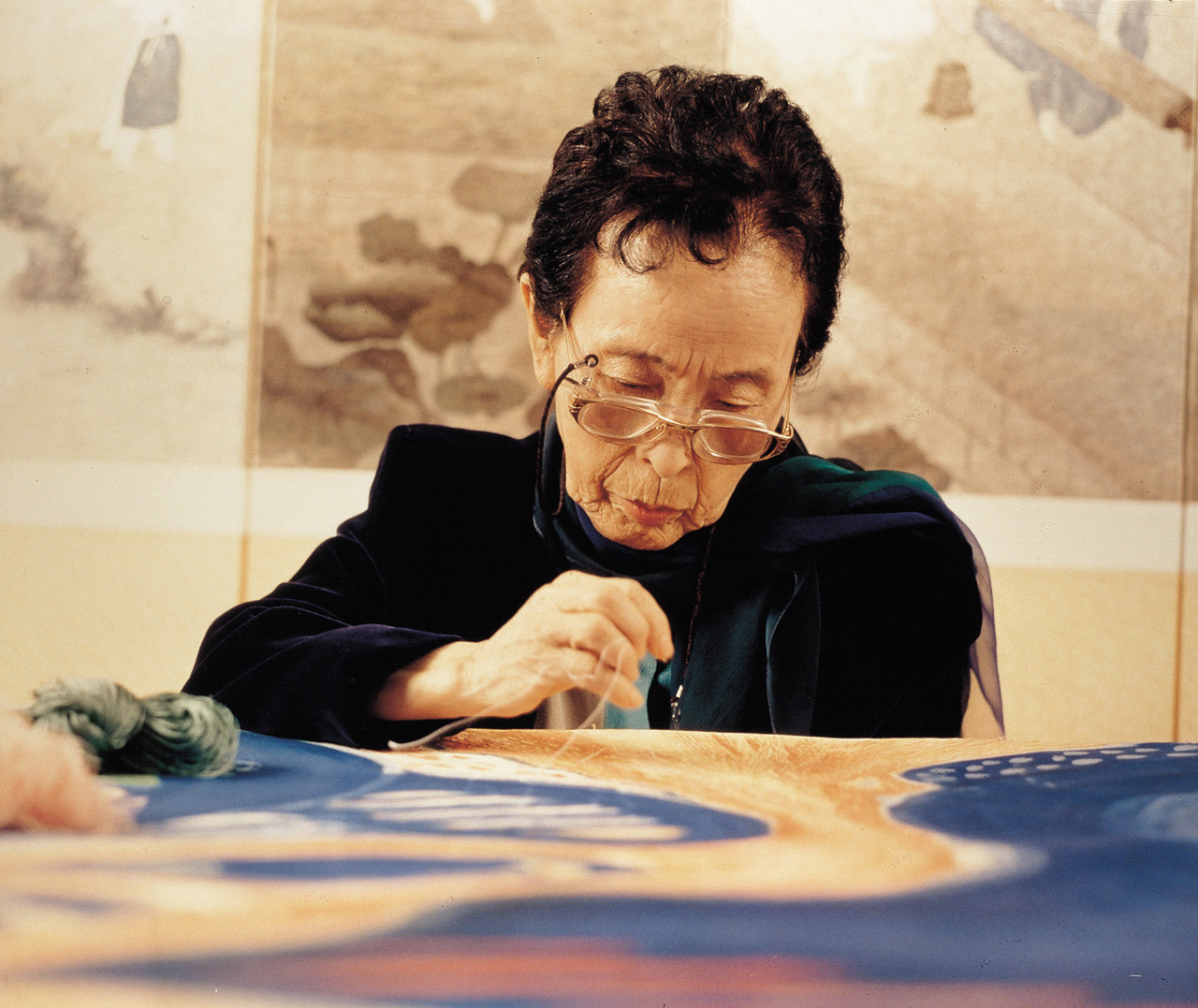
Park Eul-bok Deeply Absorbed in Her Work
Photo of Park Eulbok, Jang Woon-sang, and Park Rae-hyun (1997 Exhibition at the Seoul Arts Center)
At the Ui-dong House
Beauty expressed with thread and needle
This work, a collaboration between oil painting and embroidery, represents one of Park Eulbok's very last works. Unlike paintings rendered purely in oil on canvas, this piece draws out the distinctive qualities of silk fiber, resulting in a strikingly beautiful sheen. A defining characteristic of Park Eulbok's work is this lustrous quality, achieved primarily through the use of silk thread. This effect arises because silk fibers are composed of protein and possess an oval molecular structure—so that with every stitch, the thread catches and reflects light from multiple angles, giving embroidered works a more three-dimensional appearance. This piece was created as a collaboration between oil painting and embroidery specifically to highlight this quality. The work depicts Insubong, Baegundae, and Mangyeongdae peaks, visible from behind the Ui-dong house. The triangle at the center represents the Ui-dong house itself.사슴, 1968<사슴>은 각자 다른 모습을 하고 있는 세 마리의 사슴을 사실적으로 담아내었다. 뿔이 없는 암사슴 한 마리와 뿔이 있는 수사슴 두 마리가 있으며, 좌측 사슴의 뿔은 나뭇가지처럼 여러 개의 가지로 뻗어있어 아버지 사슴을 나타내고, 우측의 사슴은 한 가지 뿔을 가지고 있어 아들 사슴이다. 사슴의 눈은 평수를 사용하였고, 홀로 떨어져 있는 아버지 사슴의 눈을 통해 슬픈 감정을 느낄 수 있다.Deer, 1968 This work realistically depicts three deer, each rendered with distinct features. Among them is a single doe without antlers and two stags with antlers—the stag on the left has antlers branching into several points like tree limbs, representing the father deer, while the stag on the right has a single-pronged antler, representing the son deer. The eyes of the deer were rendered using the flat stitch technique (평수), and through the eyes of the father deer, standing apart from the others, a sense of sorrow can be felt.국화와 원앙, 1937《제17회 조선미술전람회》 입선작으로, 왼쪽 공간은 여백을 남기고 오른쪽 공간은 국화꽃과 한 쌍의 원앙을 배치한 작품이다. 국화꽃은 속수를 넣어 도톰하게 입체적으로 표현하였고, 원앙은 다채로운 깃털 빛깔을 나타내기 위해 섬세하게 수를 놓았다. 주로 평수와 자련수의 자수기법이 사용되었고, 국화꽃 안쪽은 매듭수와 껄껄실을 사용하여 암술과 수술 부분의 텍스처를 표현하였다. 국화는 일본 황실을 상징하는 문장이다. 일제강점기에 제작된 <국화와 원앙>에는 일본 황실을 상징하는 문장인 국화꽃의 정중앙에 딱 하나의 태극무늬가 수놓아져 있다. 이는 일본 황실에 태극기를 꽂은 것이다. 박을복은 미술대학 학생으로서 자신의 자수 작품 안에 식민지하의 나라 잃은 설움과 울분을 자신의 방식대로 표현했다.더 보기Chrysanthemums and Mandarin Ducks, 1937 Selected for the 17th Joseon Art Exhibition, this work leaves the left side of the composition empty while arranging chrysanthemum flowers and a pair of mandarin ducks on the right. The chrysanthemums were given a plump, three-dimensional quality through padded stitching (속수), while the mandarin ducks were embroidered with great delicacy to capture the varied colors of their feathers. The piece primarily employs the flat stitch (평수) and long-and-short stitch (자련수) techniques, with the inner portions of the chrysanthemum petals rendered using French knots (매듭수) and coarse silk thread (껄껄실) to convey the texture of the pistils and stamens. The chrysanthemum is a crest symbolizing the Japanese imperial family. In Chrysanthemums and Mandarin Ducks, created during the Japanese colonial period, a single Taegeuk (the symbol at the center of the Korean flag) is embroidered at the very center of the chrysanthemum—the flower representing the Japanese imperial crest. This can be read as planting the Korean flag at the heart of the Japanese imperial emblem. As an art student, Park Eulbok used her embroidery work as a means of expressing, in her own way, the sorrow and indignation of a nation that had lost its independence under colonial rule.고구려 벽화에서, 연도미상I can help translate this, but the text for "고구려 벽화에서" (From a Goguryeo Mural) wasn't included — could you paste the description text you'd like translated?나들이, 연도미상Sansaengdo (Ten Symbols of Longevity) II, 1968 Rather than the traditional white ground fabric, this work uses silver thread embroidered onto a red fabric, creating a striking contrast, with an unconventional and bold compositional approach. The traditional subject matter of the Ten Symbols of Longevity is rendered in curving, abstract forms. A large deer occupies the center of the composition, with the elixir mushroom (bullocho) depicted in deep yellow near its hind legs. In Sansaengdo imagery, the deer and the elixir mushroom are traditionally shown together, based on the folk belief that deer favor eating this mushroom of immortality.정, 1961<정>은 《제10회 대한민국미술전람회》입선작으로, 고요함을 뜻하는 정(靜)이라는 글자와 같이 경복궁 향원정(香遠亭)의 연꽃을 소재로 한 작품이다. 사실적인 기법을 사용하기보다는, 오브제를 현대적으로 해석하여 모던한 느낌을 가미하고 서양자수기법인 아플리케 기법을 사용했다. 큰 면은 천으로 처리한 뒤 거칠게 실을 꼬아 대담하게 수를 놓은 것이 특징이다.Jeong (靜, Stillness), 1961 Selected for the 10th National Art Exhibition of Korea, this work takes as its subject the lotus flowers of Hyangwonjeong Pavilion at Gyeongbokgung Palace, its title—Jeong (靜)—meaning "stillness" or "tranquility." Rather than employing a realistic technique, the work reinterprets its subject in a modern sensibility, incorporating the Western embroidery technique of appliqué. Large areas of the composition were built up using fabric, with bold stitching done using coarsely twisted thread—a defining characteristic of the piece.
The Way Home, 1997This work, a collaboration between oil painting and embroidery, represents one of Park Eulbok's very last works. Unlike paintings rendered purely in oil on canvas, this piece draws out the distinctive qualities of silk fiber, resulting in a strikingly beautiful sheen. A defining characteristic of Park Eulbok's work is this lustrous quality, achieved primarily through the use of silk thread. This effect arises because silk fibers are composed of protein and possess an oval molecular structure—so that with every stitch, the thread catches and reflects light from multiple angles, giving embroidered works a more three-dimensional appearance. This piece was created as a collaboration between oil painting and embroidery specifically to highlight this quality. The work depicts Insubong, Baegundae, and Mangyeongdae peaks, visible from behind the Ui-dong house. The triangle at the center represents the Ui-dong house itself.사슴, 1968<사슴>은 각자 다른 모습을 하고 있는 세 마리의 사슴을 사실적으로 담아내었다. 뿔이 없는 암사슴 한 마리와 뿔이 있는 수사슴 두 마리가 있으며, 좌측 사슴의 뿔은 나뭇가지처럼 여러 개의 가지로 뻗어있어 아버지 사슴을 나타내고, 우측의 사슴은 한 가지 뿔을 가지고 있어 아들 사슴이다. 사슴의 눈은 평수를 사용하였고, 홀로 떨어져 있는 아버지 사슴의 눈을 통해 슬픈 감정을 느낄 수 있다.Deer, 1968 This work realistically depicts three deer, each rendered with distinct features. Among them is a single doe without antlers and two stags with antlers—the stag on the left has antlers branching into several points like tree limbs, representing the father deer, while the stag on the right has a single-pronged antler, representing the son deer. The eyes of the deer were rendered using the flat stitch technique (평수), and through the eyes of the father deer, standing apart from the others, a sense of sorrow can be felt.국화와 원앙, 1937《제17회 조선미술전람회》 입선작으로, 왼쪽 공간은 여백을 남기고 오른쪽 공간은 국화꽃과 한 쌍의 원앙을 배치한 작품이다. 국화꽃은 속수를 넣어 도톰하게 입체적으로 표현하였고, 원앙은 다채로운 깃털 빛깔을 나타내기 위해 섬세하게 수를 놓았다. 주로 평수와 자련수의 자수기법이 사용되었고, 국화꽃 안쪽은 매듭수와 껄껄실을 사용하여 암술과 수술 부분의 텍스처를 표현하였다. 국화는 일본 황실을 상징하는 문장이다. 일제강점기에 제작된 <국화와 원앙>에는 일본 황실을 상징하는 문장인 국화꽃의 정중앙에 딱 하나의 태극무늬가 수놓아져 있다. 이는 일본 황실에 태극기를 꽂은 것이다. 박을복은 미술대학 학생으로서 자신의 자수 작품 안에 식민지하의 나라 잃은 설움과 울분을 자신의 방식대로 표현했다.더 보기Chrysanthemums and Mandarin Ducks, 1937 Selected for the 17th Joseon Art Exhibition, this work leaves the left side of the composition empty while arranging chrysanthemum flowers and a pair of mandarin ducks on the right. The chrysanthemums were given a plump, three-dimensional quality through padded stitching (속수), while the mandarin ducks were embroidered with great delicacy to capture the varied colors of their feathers. The piece primarily employs the flat stitch (평수) and long-and-short stitch (자련수) techniques, with the inner portions of the chrysanthemum petals rendered using French knots (매듭수) and coarse silk thread (껄껄실) to convey the texture of the pistils and stamens. The chrysanthemum is a crest symbolizing the Japanese imperial family. In Chrysanthemums and Mandarin Ducks, created during the Japanese colonial period, a single Taegeuk (the symbol at the center of the Korean flag) is embroidered at the very center of the chrysanthemum—the flower representing the Japanese imperial crest. This can be read as planting the Korean flag at the heart of the Japanese imperial emblem. As an art student, Park Eulbok used her embroidery work as a means of expressing, in her own way, the sorrow and indignation of a nation that had lost its independence under colonial rule.고구려 벽화에서, 연도미상I can help translate this, but the text for "고구려 벽화에서" (From a Goguryeo Mural) wasn't included — could you paste the description text you'd like translated?나들이, 연도미상Sansaengdo (Ten Symbols of Longevity) II, 1968 Rather than the traditional white ground fabric, this work uses silver thread embroidered onto a red fabric, creating a striking contrast, with an unconventional and bold compositional approach. The traditional subject matter of the Ten Symbols of Longevity is rendered in curving, abstract forms. A large deer occupies the center of the composition, with the elixir mushroom (bullocho) depicted in deep yellow near its hind legs. In Sansaengdo imagery, the deer and the elixir mushroom are traditionally shown together, based on the folk belief that deer favor eating this mushroom of immortality.정, 1961<정>은 《제10회 대한민국미술전람회》입선작으로, 고요함을 뜻하는 정(靜)이라는 글자와 같이 경복궁 향원정(香遠亭)의 연꽃을 소재로 한 작품이다. 사실적인 기법을 사용하기보다는, 오브제를 현대적으로 해석하여 모던한 느낌을 가미하고 서양자수기법인 아플리케 기법을 사용했다. 큰 면은 천으로 처리한 뒤 거칠게 실을 꼬아 대담하게 수를 놓은 것이 특징이다.Jeong (靜, Stillness), 1961 Selected for the 10th National Art Exhibition of Korea, this work takes as its subject the lotus flowers of Hyangwonjeong Pavilion at Gyeongbokgung Palace, its title—Jeong (靜)—meaning "stillness" or "tranquility." Rather than employing a realistic technique, the work reinterprets its subject in a modern sensibility, incorporating the Western embroidery technique of appliqué. Large areas of the composition were built up using fabric, with bold stitching done using coarsely twisted thread—a defining characteristic of the piece.
This work realistically depicts three deer, each rendered with distinct features. Among them is a single doe without antlers and two stags with antlers—the stag on the left has antlers branching into several points like tree limbs, representing the father deer, while the stag on the right has a single-pronged antler, representing the son deer. The eyes of the deer were rendered using the flat stitch technique (평수), and through the eyes of the father deer, standing apart from the others, a sense of sorrow can be felt.
Deer, 1968This work realistically depicts three deer, each rendered with distinct features. Among them is a single doe without antlers and two stags with antlers—the stag on the left has antlers branching into several points like tree limbs, representing the father deer, while the stag on the right has a single-pronged antler, representing the son deer. The eyes of the deer were rendered using the flat stitch technique (평수), and through the eyes of the father deer, standing apart from the others, a sense of sorrow can be felt.
Selected for the 17th Joseon Art Exhibition, this work leaves the left side of the composition empty while arranging chrysanthemum flowers and a pair of mandarin ducks on the right. The chrysanthemums were given a plump, three-dimensional quality through padded stitching (속수), while the mandarin ducks were embroidered with great delicacy to capture the varied colors of their feathers. The piece primarily employs the flat stitch (평수) and long-and-short stitch (자련수) techniques, with the inner portions of the chrysanthemum petals rendered using French knots (매듭수) and coarse silk thread (껄껄실) to convey the texture of the pistils and stamens. The chrysanthemum is a crest symbolizing the Japanese imperial family. In Chrysanthemums and Mandarin Ducks, created during the Japanese colonial period, a single Taegeuk (the symbol at the center of the Korean flag) is embroidered at the very center of the chrysanthemum—the flower representing the Japanese imperial crest. This can be read as planting the Korean flag at the heart of the Japanese imperial emblem. As an art student, Park Eulbok used her embroidery work as a means of expressing, in her own way, the sorrow and indignation of a nation that had lost its independence under colonial rule.
Chrysanthemums and Mandarin Ducks, 1937Selected for the 17th Joseon Art Exhibition, this work leaves the left side of the composition empty while arranging chrysanthemum flowers and a pair of mandarin ducks on the right. The chrysanthemums were given a plump, three-dimensional quality through padded stitching (속수), while the mandarin ducks were embroidered with great delicacy to capture the varied colors of their feathers. The piece primarily employs the flat stitch (평수) and long-and-short stitch (자련수) techniques, with the inner portions of the chrysanthemum petals rendered using French knots (매듭수) and coarse silk thread (껄껄실) to convey the texture of the pistils and stamens. The chrysanthemum is a crest symbolizing the Japanese imperial family. In Chrysanthemums and Mandarin Ducks, created during the Japanese colonial period, a single Taegeuk (the symbol at the center of the Korean flag) is embroidered at the very center of the chrysanthemum—the flower representing the Japanese imperial crest. This can be read as planting the Korean flag at the heart of the Japanese imperial emblem. As an art student, Park Eulbok used her embroidery work as a means of expressing, in her own way, the sorrow and indignation of a nation that had lost its independence under colonial rule.
From a Goguryeo Mural
An Outing
Selected for the 12th National Art Exhibition of Korea, this work takes as its subject the jangseung, a traditional Korean folk totem. Jangseung are wooden or stone figures erected at village entrances or along roadsides as a form of folk belief and guardianship. The composition arranges multiple jangseung figures across three distinct sections, creating a striking contrast between red, black, and gray. The rough, weathered texture of the jangseung was rendered using coarse silk thread (껄껄실). The red frame is made of lacquered wood.
Cheonha Daejanggun (Great General Under Heaven), 1963Selected for the 12th National Art Exhibition of Korea, this work takes as its subject the jangseung, a traditional Korean folk totem. Jangseung are wooden or stone figures erected at village entrances or along roadsides as a form of folk belief and guardianship. The composition arranges multiple jangseung figures across three distinct sections, creating a striking contrast between red, black, and gray. The rough, weathered texture of the jangseung was rendered using coarse silk thread (껄껄실). The red frame is made of lacquered wood.
This work takes hwatu (Korean flower playing cards) as its subject, depicting the twelve months represented by the twelve suits of the cards. Beginning with January's Pine and Crane on the right, the composition reworks the imagery of all twelve months—Plum Blossom and Bird, Cherry Blossom, Black Clover, Orchid, Peony, Red Clover, Full Moon over Mount Gongsan, Chrysanthemum, Maple, Paulownia, and Rain—painting them onto silk before embroidering over the design.
Image of Hwatu, 1997This work takes hwatu (Korean flower playing cards) as its subject, depicting the twelve months represented by the twelve suits of the cards. Beginning with January's Pine and Crane on the right, the composition reworks the imagery of all twelve months—Plum Blossom and Bird, Cherry Blossom, Black Clover, Orchid, Peony, Red Clover, Full Moon over Mount Gongsan, Chrysanthemum, Maple, Paulownia, and Rain—painting them onto silk before embroidering over the design.
Influenced by the work of Seoknam Lee Kyung-sung, this embroidery piece was stitched using the artist's own hair, lending deeper meaning to its theme of "faces I long to see." Since ancient times, it was said that repaying a profound debt of gratitude could take the form of du-bal-gon-gu (頭髮綑屨)—weaving straw sandals from one's own hair. There are even recorded cases in the Andong region of women weaving sandals from their own hair to bury alongside husbands who had died young, as an expression of longing. Objects made from human hair are thus understood to carry the meaning of yearning for a benefactor or beloved acquaintance.
Faces I Long to See, 1997Influenced by the work of Seoknam Lee Kyung-sung, this embroidery piece was stitched using the artist's own hair, lending deeper meaning to its theme of "faces I long to see." Since ancient times, it was said that repaying a profound debt of gratitude could take the form of du-bal-gon-gu (頭髮綑屨)—weaving straw sandals from one's own hair. There are even recorded cases in the Andong region of women weaving sandals from their own hair to bury alongside husbands who had died young, as an expression of longing. Objects made from human hair are thus understood to carry the meaning of yearning for a benefactor or beloved acquaintance.
his work embroiders the Eiffel Tower, a sight that left a deep impression on the artist during her 1979 trip to Paris, France.
Eiffel Tower, 1979his work embroiders the Eiffel Tower, a sight that left a deep impression on the artist during her 1979 trip to Paris, France.
Inspired by the sight of a diverse frog collection during a visit to the home of Mme. Dupeux (Professor of Tissage at the École Nationale Supérieure des Arts Décoratifs in Paris), the artist created Frogs in a Pond in 1979.
Frog, 1979Inspired by the sight of a diverse frog collection during a visit to the home of Mme. Dupeux (Professor of Tissage at the École Nationale Supérieure des Arts Décoratifs in Paris), the artist created Frogs in a Pond in 1979.
Created after a trip to China, this work depicts a rabbit pounding rice cakes beneath a cassia tree on the moon. The scene is rendered in two symmetrical panels, each set in a different color palette.
Moon Land A, 1979Created after a trip to China, this work depicts a rabbit pounding rice cakes beneath a cassia tree on the moon. The scene is rendered in two symmetrical panels, each set in a different color palette.
This work depicts two chicks. Feather stitch (새털수) was used to render the chicks, while chain stitch (이음수) and flat stitch (평수) were used to depict the barley.
Chicks, 1975This work depicts two chicks. Feather stitch (새털수) was used to render the chicks, while chain stitch (이음수) and flat stitch (평수) were used to depict the barley.
Selected for the 11th National Art Exhibition of Korea, this work portrays a crowd of figures whose age and gender cannot be distinguished. The large canvas is densely filled with outlined forms, using bold contrasts of green, red, and yellow, and drawing out the distinctive texture of thread to capture the varied expressions of the human crowd. The unconventional ground fabric and thick thread lend depth and dimensionality to the flat surface, and the work is notable for its incorporation of abstract painting sensibilities. A wide range of techniques were used in the embroidery, including flat stitch (평수), scattered cross stitch (난십자수), seed stitch (자릿수), modified triangle stitch (변형 삼각수), star stitch (별무늬수), and patterned wood-grain stitch (무늬목수).
Expression, 1962Selected for the 11th National Art Exhibition of Korea, this work portrays a crowd of figures whose age and gender cannot be distinguished. The large canvas is densely filled with outlined forms, using bold contrasts of green, red, and yellow, and drawing out the distinctive texture of thread to capture the varied expressions of the human crowd. The unconventional ground fabric and thick thread lend depth and dimensionality to the flat surface, and the work is notable for its incorporation of abstract painting sensibilities. A wide range of techniques were used in the embroidery, including flat stitch (평수), scattered cross stitch (난십자수), seed stitch (자릿수), modified triangle stitch (변형 삼각수), star stitch (별무늬수), and patterned wood-grain stitch (무늬목수).
This work arranges two birds in symmetrical composition. Gold, silver, and black threads were embroidered onto a red ground fabric, creating a dramatic contrast that heightens the work's splendor. The ground fabric consists of overlapping upper and lower layers; at the center of the piece, the weft threads of the upper layer were removed while the warp threads were left intact, with ten jade beads threaded through them individually to add a decorative touch.
In Poetic Inspiration, 1968This work arranges two birds in symmetrical composition. Gold, silver, and black threads were embroidered onto a red ground fabric, creating a dramatic contrast that heightens the work's splendor. The ground fabric consists of overlapping upper and lower layers; at the center of the piece, the weft threads of the upper layer were removed while the warp threads were left intact, with ten jade beads threaded through them individually to add a decorative touch.
Rather than the traditional white ground fabric, this work uses silver thread embroidered onto a red fabric, creating a striking contrast, with an unconventional and bold compositional approach. The traditional subject matter of the Ten Symbols of Longevity is rendered in curving, abstract forms. A large deer occupies the center of the composition, with the elixir mushroom (bullocho) depicted in deep yellow near its hind legs. In Sansaengdo imagery, the deer and the elixir mushroom are traditionally shown together, based on the folk belief that deer favor eating this mushroom of immortality.
Sansaengdo (Ten Symbols of Longevity) II, 1968Rather than the traditional white ground fabric, this work uses silver thread embroidered onto a red fabric, creating a striking contrast, with an unconventional and bold compositional approach. The traditional subject matter of the Ten Symbols of Longevity is rendered in curving, abstract forms. A large deer occupies the center of the composition, with the elixir mushroom (bullocho) depicted in deep yellow near its hind legs. In Sansaengdo imagery, the deer and the elixir mushroom are traditionally shown together, based on the folk belief that deer favor eating this mushroom of immortality.
Selected for the 10th National Art Exhibition of Korea, this work takes as its subject the lotus flowers of Hyangwonjeong Pavilion at Gyeongbokgung Palace, its title—Jeong (靜)—meaning "stillness" or "tranquility." Rather than employing a realistic technique, the work reinterprets its subject in a modern sensibility, incorporating the Western embroidery technique of appliqué. Large areas of the composition were built up using fabric, with bold stitching done using coarsely twisted thread—a defining characteristic of the piece.
Jeong (靜, Stillness), 1961Selected for the 10th National Art Exhibition of Korea, this work takes as its subject the lotus flowers of Hyangwonjeong Pavilion at Gyeongbokgung Palace, its title—Jeong (靜)—meaning "stillness" or "tranquility." Rather than employing a realistic technique, the work reinterprets its subject in a modern sensibility, incorporating the Western embroidery technique of appliqué. Large areas of the composition were built up using fabric, with bold stitching done using coarsely twisted thread—a defining characteristic of the piece.
